

Screen Free Creative Activities for Kids
Coloring books, craft supplies, and a bit of unstructured time can do more for a child’s development than you might expect. Screen-free creative activities give kids the chance to build fine motor skills, solve problems on their own terms, and express ideas without a guided interface telling them what to tap next. These activities also create space for concentration to develop naturally, which supports memory and focus over time. Whether your child is working through a simple coloring page or assembling a cardboard sculpture, the benefits stack up quietly in the background. This article walks through the core activities, what they build, and how to make them part of your routine without turning it into a production.
Why Coloring Still Matters
Coloring helps children develop the hand control they need for writing and other tasks that require precision. Holding a crayon or marker in the correct grip, staying within lines, and applying consistent pressure all train the small muscles in the hand and fingers. These are the same muscles that will later guide a pencil through cursive or hold a fork properly at the table.
Color recognition is another quiet benefit. As children match colors to objects or choose shades for a scene, they build the vocabulary and visual sorting skills that show up later in math and reading. Spatial awareness develops too. Understanding where one shape ends and another begins, or how to position a color within a boundary, teaches concepts like above, between, and below without a formal lesson.
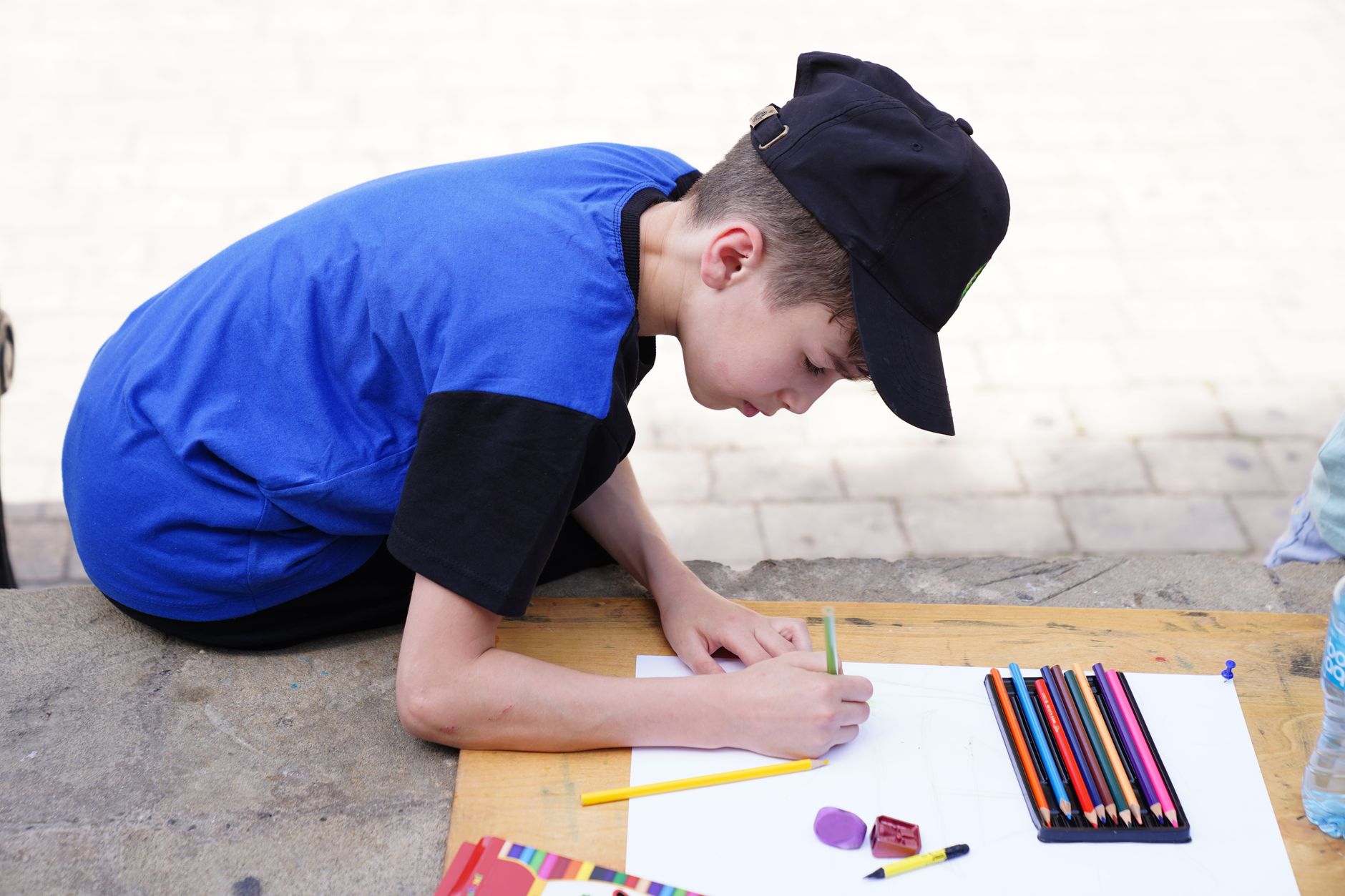
Confidence builds with every completed page. A child who finishes a coloring sheet has created something they can hold, show, and keep. That sense of accomplishment is tangible in a way that screen-based activities often are not. You can keep a folder of finished pages and revisit them months later, which reinforces the idea that effort leads to results you can see and touch.
Simple Crafts That Build Real Skills
Crafts involving cutting, gluing, folding, and assembling bring together several developmental threads at once. Fine motor control continues to improve, but now hand-eye coordination enters the picture. A child cutting along a line or threading a bead onto a string is managing multiple inputs – visual tracking, hand movement, and spatial judgment – all at the same time.
Problem-solving happens naturally when a child decides how to attach two pieces of cardboard or which color paper to use for a background. These decisions might seem small, but they add up to cognitive practice that feels like play. Creative activities for kids encourage them to brainstorm, test ideas, and adjust when something does not work the first time.
Emotional regulation also finds an outlet here. A child who is frustrated or overstimulated can redirect that energy into tearing paper, squeezing glue, or arranging shapes. The repetitive motions involved in many crafts have a calming effect, and the focus required can interrupt a spiral of big feelings. The finished product matters less than the process itself, which gives children permission to work through emotions without needing to explain them.
Ideas You Can Start Today
You do not need a dedicated craft room or a Pinterest-worthy setup to begin. A stack of plain paper, a box of crayons, and a pair of child-safe scissors will cover most of the basics. Coloring books are helpful, but free printables are widely available online if you want variety without the cost. Many screen-free activities require materials you already have in a junk drawer.
Collage work is forgiving and uses up scraps. Give your child old magazines, construction paper, fabric swatches, or foil, and let them cut and glue without a specific end goal. The act of choosing, arranging, and sticking down pieces is the point. Some children will create recognizable scenes, while others will focus on color or texture. Both approaches are valid.
Simple painting with washable watercolors or poster paint builds color-mixing skills and gives children a medium that behaves differently from crayons. The unpredictability of paint spreading or colors bleeding into each other teaches patience and adaptability. Set up a space that is easy to clean, cover the table with an old sheet or newspaper, and let them experiment. If you want to keep the mess contained, try painting with water on a chalkboard or sidewalk – the same motions, but nothing permanent.
Modeling with playdough or air-dry clay adds a three-dimensional element. Rolling, pinching, and shaping dough strengthens hand muscles and gives children a tactile experience that flat media cannot provide. You can make homemade playdough with flour, salt, water, and food coloring if you want to avoid store-bought versions. The process of making the dough can be part of the activity itself.
Making It a Habit Without the Pressure
Screen-free creative time works best when it feels like an option, not an obligation. Keep supplies accessible in a low drawer or bin so your child can start an activity without asking for permission or waiting for you to set things up. Rotate materials every few weeks to keep interest fresh without overwhelming them with choices.
Set aside a regular window of time when screens are off-limits for everyone in the house. This removes the feeling that the child is being singled out or punished. If the adults are also reading, drawing, or working on a project, the child sees creative work as a normal part of daily life rather than a substitute for something better.
Resist the urge to direct or correct unless safety is involved. If your child colors a tree purple or glues things in a way that does not make sense to you, let it be. The goal is not a finished product that meets adult standards. The goal is the process – the decisions, the focus, the hand movements, and the confidence that comes from making something on their own terms.
Some children will sit for an hour with a coloring book. Others will spend five minutes and move on. Both patterns are fine. Activities for kids of all ages vary in complexity and duration, and your child’s engagement will shift as they grow. The habit of reaching for creative tools instead of a screen is what matters, not the length of each session.
Q&A
What age should kids start coloring and crafts?
Most children can start simple coloring and tearing paper by age two. Supervision and age-appropriate materials matter more than a specific age milestone.
How do I keep craft supplies organized?
Use clear bins or labeled containers stored at child height. Rotate supplies regularly so the selection stays manageable and interesting without clutter.
Are expensive art supplies worth it for young kids?
No. Basic crayons, washable markers, construction paper, and glue are enough. Quality matters less than access and freedom to use materials without worry.
How long should a craft session last?
Follow your child’s interest. Some sessions last five minutes, others an hour. Forcing longer sessions creates resistance rather than building the habit.
What if my child refuses to try creative activities?
Start with open-ended materials and no expectations. Sometimes children resist structured crafts but enjoy ripping paper, sorting colors, or simply having supplies nearby.
Conclusion
Screen-free creative activities do not require elaborate setups or expensive kits. The skills that develop through coloring, cutting, gluing, and building are foundational, and they happen without the child realizing they are learning. Fine motor control, problem-solving, emotional regulation, and spatial awareness all improve through repetition and experimentation. The key is making these activities as easy to start as opening a tablet, which means keeping supplies accessible and removing the pressure to produce something impressive. When creative work becomes a normal part of the day rather than a special event, children build the habit of making rather than consuming. That shift in how they spend unstructured time has effects that reach far beyond childhood.